
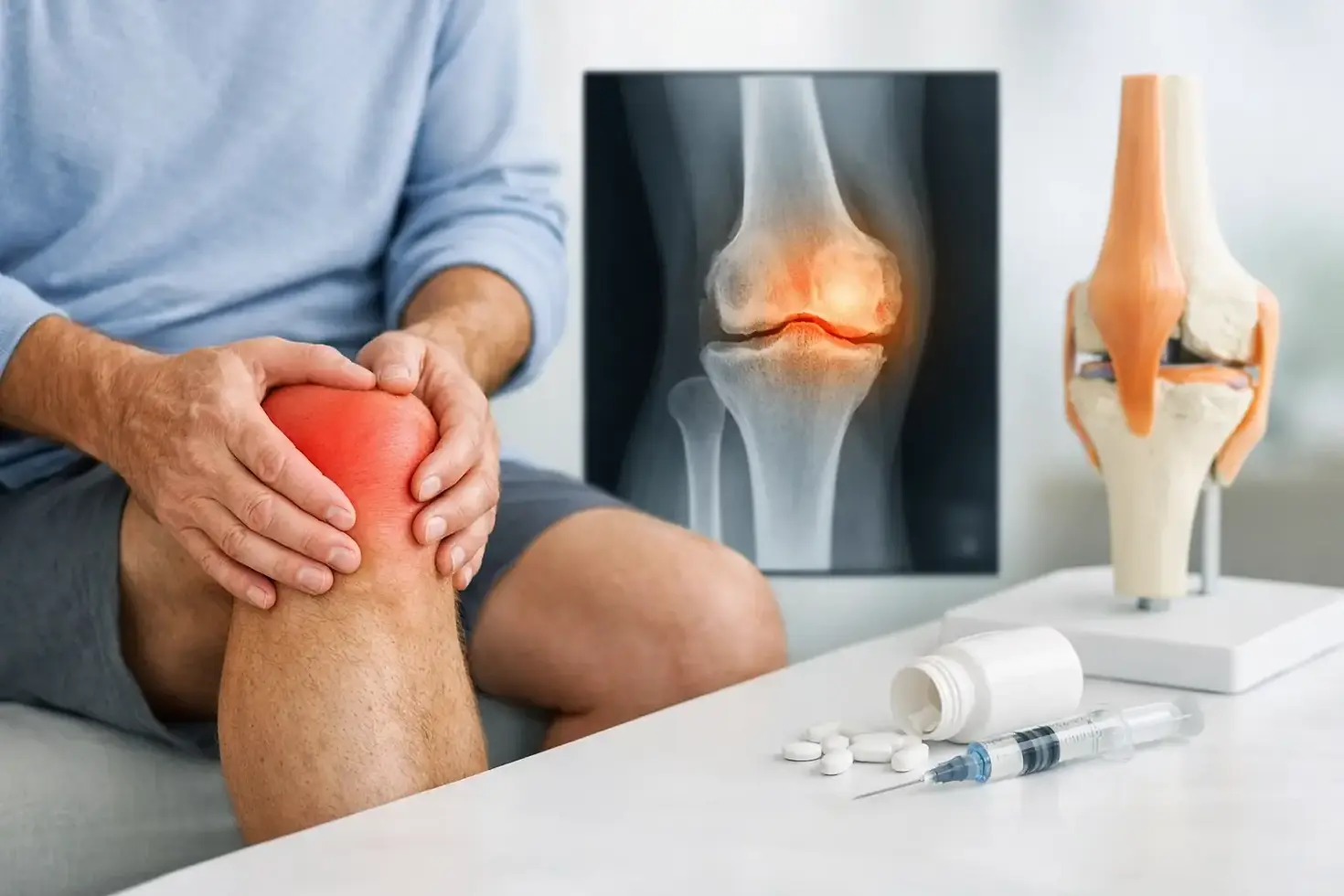
Knee Arthritis: Symptoms, Causes and Treatment
- 3 days ago
- 6 min read
If your knee has become stiff first thing in the morning, aches after a walk, or protests every time you go up and down the stairs, knee arthritis may be part of the picture. For many people, the hardest part is not just the pain itself. It is the uncertainty - why it has started, whether it will keep getting worse, and what you can do without making it flare up.
The good news is that knee arthritis does not automatically mean you have to stop being active. In many cases, the right combination of expert assessment, targeted exercise, pain management and sensible activity modification can make a real difference to both symptoms and confidence.
What is knee arthritis?
Knee arthritis is a broad term used to describe changes within the knee joint that lead to pain, stiffness and reduced function. The most common type is osteoarthritis, where the joint surfaces, cartilage and surrounding structures change over time. Despite what many people are told, this is not simply a case of the knee being "worn out". It is a more complex process involving joint tissue changes, muscle weakness, reduced movement and sometimes inflammation.
That matters because the language used around arthritis can shape how people feel about it. If you believe your knee is fragile or beyond help, it is easy to avoid movement altogether. In reality, most knees with arthritis respond better to the right kind of loading than to complete rest.
Common symptoms of knee arthritis
Symptoms can build gradually or become more noticeable after a flare-up. Pain is often the feature people notice first, but it is not the only one. Knee arthritis may cause stiffness after sitting, difficulty straightening or bending the knee fully, swelling around the joint, clicking or grinding sensations, and pain during walking, stairs, kneeling or getting up from a chair.
Some people feel relatively comfortable during the day but struggle after longer periods on their feet. Others notice their knee is worse in cold weather, after gardening, or after a sudden increase in exercise. It depends on the stage of the condition, your general strength, your activity levels and how irritated the joint is at that moment.
What causes knee arthritis?
There is rarely one single cause. Age can be a factor, but it is not the full story. Previous knee injuries, such as ligament damage or meniscal tears, can increase the risk. So can a history of repetitive heavy loading, reduced muscle strength, changes in walking pattern, carrying extra body weight, or having a family tendency towards osteoarthritis.
Sometimes knee arthritis develops after years of coping with smaller issues that were never fully addressed. For example, ongoing weakness after an old sports injury or months of reduced movement after another health problem can leave the knee less able to tolerate everyday load.
That is why proper assessment matters. Two people can both have arthritis on a scan and need very different treatment plans.
Does an X-ray tell the whole story?
Not always. Imaging can be useful, but it is only one part of the picture. Some people have significant arthritic changes on an X-ray and very manageable symptoms. Others have more pain than their scan might suggest.
Pain is influenced by several factors, including joint irritation, muscle capacity, confidence in movement, sleep, stress and overall health. That is why treatment should not be based on imaging alone. A knee needs to be assessed in the context of how you move, what aggravates it and what you need it to do in daily life.
How knee arthritis affects everyday life
The impact often goes beyond the knee itself. People start avoiding walks, kneeling, stairs, gym classes or playing with children because they are worried about making things worse. Over time, that can lead to weaker muscles, poorer balance and even less confidence in the joint.
It can also affect work. If your job involves standing, lifting, climbing, driving or moving quickly, knee symptoms can become draining. Even desk-based workers may find it uncomfortable to sit for long periods and then stand up.
This is where a personalised approach is so important. Treatment should not just focus on pain relief in isolation. It should help you return to the activities that matter to you, whether that is walking the dog, working comfortably, keeping up with sport or simply getting around without thinking about every step.
Treatment for knee arthritis
There is no single best treatment for everyone with knee arthritis, but there are several options that work well when tailored properly.
Exercise therapy
Exercise is one of the most effective treatments for knee arthritis. That does not mean pushing through severe pain or doing generic online routines. It means choosing the right exercises for your current level and building gradually.
Strengthening the muscles around the knee and hip can improve support through the joint and reduce strain during everyday tasks. Mobility work can help with stiffness, while balance and control exercises can improve confidence. The key is progression. Too little challenge may not help, but too much too soon can aggravate symptoms.
Activity modification
This is not about stopping everything you enjoy. It is about making smart adjustments while the knee settles and builds capacity. That might mean reducing hill walking for a few weeks, breaking longer jobs into smaller blocks, or alternating higher-impact activity with gentler options such as cycling or swimming.
Good rehab should help you work out what you can keep doing, what needs adapting and how to increase activity safely.
Hands-on treatment and pain relief strategies
For some people, hands-on treatment can help ease stiffness, improve movement and make exercise more comfortable. Advice on pacing, heat, symptom management and flare-up control can also be useful.
If pain is limiting progress, other options may be discussed depending on your presentation. In a specialist musculoskeletal setting, that may include broader medical management or referral onward when needed. The important point is that treatment should be guided by clinical reasoning, not a one-size-fits-all formula.
Weight management where relevant
This can be a sensitive subject, but it is worth mentioning carefully because it can make a genuine difference for some people. Even modest changes in body weight may reduce load through the knee joint. That said, it is only one part of the picture, and people of all body types can develop knee arthritis.
Injection therapy or surgical opinion
Some patients benefit from injection therapy, particularly when pain is stopping them from moving enough to rehabilitate well. Others may eventually need an orthopaedic opinion if symptoms are severe and daily function remains poor despite appropriate conservative care.
Surgery is not the starting point for most people. Many can improve significantly without it. But when symptoms are advanced, discussing the right timing and route can be helpful rather than leaving it until mobility has declined further.
When should you seek an assessment for knee arthritis?
If knee pain has been lingering for more than a few weeks, is affecting your walking or sleep, or keeps limiting normal activity, it is worth getting it checked. The same applies if your knee keeps swelling, feels unstable, or you are starting to avoid movement because you no longer trust it.
An expert assessment should look at more than the knee alone. It should consider your strength, movement pattern, previous injuries, training or work demands and your goals. At Atlas Physiotherapy Clinic, that approach helps turn a vague concern into a clear plan - what is happening, what can be improved, and what the next step should be.
What can you do now?
If you suspect knee arthritis, try not to swing between complete rest and overdoing it on good days. Keep moving within tolerable limits, use simple pain-relief measures if needed, and pay attention to patterns - what helps, what flares it up and how long symptoms last afterwards.
Most importantly, do not assume pain means damage is rapidly worsening. Knees with arthritis often respond well to the right advice and a personalised treatment plan. With the right support, many people become stronger, move more easily and feel much more in control of their symptoms.
A painful knee can make everyday life feel smaller than it should. The aim is not just to calm symptoms, but to help you trust your knee again and get back to living with more freedom.


Comments